

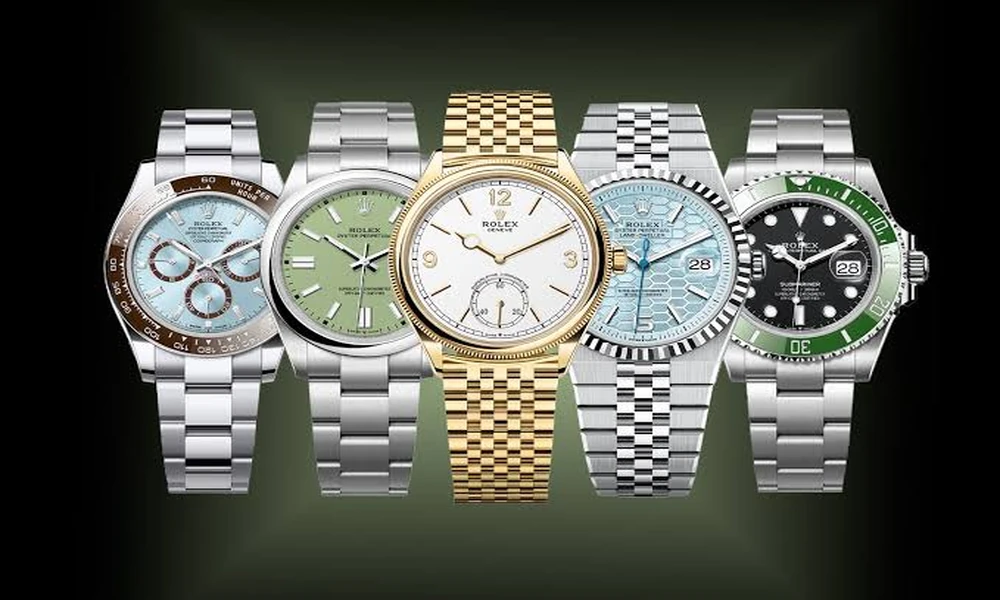

Rolex watches have evolved through nearly a century of case construction, dial design, and bracelet material changes. It began with a focus on practical, water-resistant wristwatches that gradually evolved into a collection of distinctive luxury timepieces. Each generation carries over familiar design elements while introducing improvements. Click here to discover how Rolex’s classic designs influence modern watch collections.
How did Rolex designs begin?
Early Rolex watches were designed to combine elegance and practicality. Case sizes were modest, dials were simple, and straps were traditionally leather. Watches by Rolex gradually became more distinctive.
- A defining moment came in 1926 with the introduction of oyster cases. This water-resistant Rolex is fitted with a screw-down crown, caseback, and bezel. Its rounded case profile established the brand’s rounded profile beyond its practical purpose.
- Later, Rolex improved its dial arrangements and bracelet designs. A new era began in 1945 with the introduction of the Datejust. A date window at three o’clock, along with the Jubilee bracelet, gave the dial a distinct look.
- Cyclops magnifying lens over date display introduced in 1953 by Rolex. A functional detail can also shape a watch’s appearance through this small addition.
Rolex developed watches for more specialized activities after establishing these design elements.
Which models transformed Rolex styling?
During the 1950s and 1960s, Rolex introduced several professional watches that expanded its design identity. Each collection developed a recognisable appearance based on its intended function, creating styles that influenced later generations.
Several models played a key role in this transformation:
- Submariner (1953) – Introduced a rotating diving bezel, luminous hour markers, and a clear dial arrangement. Its combination of practical features and balanced proportions established a lasting sports-watch design.
- GMT-Master (1955) – Added 24-hour bezel and time-zone indication. Its distinctive two-colour bezel combinations introduced a more expressive visual element to Rolex’s professional collections.
- Cosmograph Daytona (1963) – Featured chronograph subdials and a tachymeter scale, creating a technical appearance associated with motorsport and precise elapsed-time measurement.
- Sea-Dweller (1967) – Developed the diving-watch concept with a more substantial case and specialised construction, giving the model a distinct professional identity.
These models introduced design features that became the signatures of their respective collections. Rolex refined bezel shapes, bracelet links, crown guards, and dial proportions over time.
Modern innovations shape classic designs
Its watches still have many case shapes and dial arrangements that date back to the 20th century. Improved materials, refined proportions, and enhanced finishing dominated design evolution.
There was a major development in bracelets. Improved solid-link construction, clasps, and adjustment systems contributed to modern watches’ integration. Oyster and Jubilee bracelets retained their traditional visual identities while benefiting from updated manufacturing techniques. Bezel materials have also changed dramatically. Ceramic bezels introduced by Rolex in the 2000s provided enhanced scratch resistance and lasting colour. Bezel designs were updated in a contemporary manner.
The dial style evolved with the material. An updated luminous display and a broader color spectrum add variety to the collection. There are several styles of bracelet available with Datejust watches. Purposeful layouts remain in sports watches.